- Headings and lists express readable structure
- Small text changes can be compared
- Other information may need JSON, models, or media files
Document-as-Code | Concept and mechanics
Information we can work with
One maintained source can support more than one publication
A document is one useful view
A self-contained publication
- Content, layout, and delivery together
- Useful for reading and exchange
- Shared passages may be copied
Maintained source information
- Content has a clear owner
- Outputs refer to shared sources
- Presentation can vary by audience
Separate the source from its presentation
Reuse needs explicit selection and processing rules
- 01
Maintain
Procedure text and review metadata
- 02
Select
Choose content suitable for the audience
- 03
Transform
Apply an output template or calculation
- Handbook
- Website
- Training material
A conceptual model, not a guarantee that every output updates automatically.
Markdown is one source format
Recording is not the same as approving
Recorded history
- What changed and when
- Author and revision reference
- A diff between versions
Review evidence
- Who examined the change
- Which revision they reviewed
- Their decision and unresolved questions
Give software explicit fields
Procedure metadata answers questions that prose leaves implicit
- id: PROC-003 identifies the item
- owner: people-team identifies its maintainer
- status: draft records its review state
Link information that must stay consistent
A policy change can identify related procedures for review
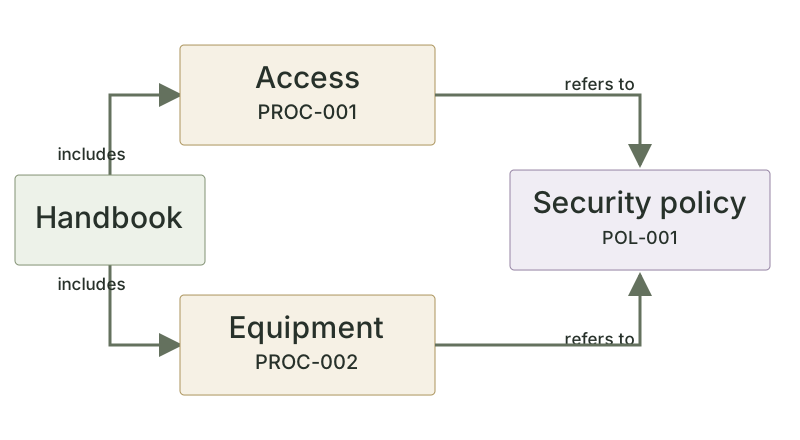
Make processing rules inspectable
Checks and transformations are maintained work too
- 01
Read
Load selected source files
- 02
Check
Validate fields and references
- 03
Transform
Assemble a view for its audience
- Review queue
- Handbook
- AI context
A successful run establishes only what its configured checks cover.
Give AI relevant evidence, not just a prompt
A request alone
- Draft a training guide
- Unclear source revision
- Unclear limits on proposed changes
Selected context
- Reviewed access instructions
- Audience and output requirements
- Project rules and required checks
Try one complete information flow
Choose a source, a consumer, and one useful output
- Name the owner and review responsibility
- Try the source and metadata labs
- Inspect the result and improve the rules